
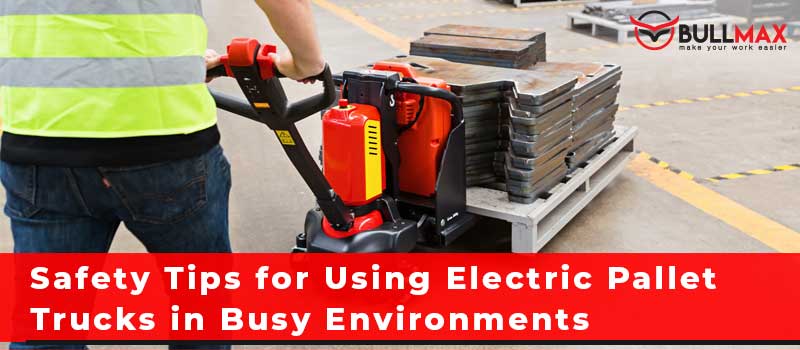
Electric pallet trucks are vital in modern warehouses and busy settings. It is key to stick to protocols and best practices when using electric pallet trucks.
They help move goods easily and lower physical strain. But if operators aren’t careful, the chance of accidents rises in busy areas.
Let us explore the essential safety tips and best practices to follow when using electric pallet trucks in busy workplaces.
Operator Training and Personal Protective Equipment (PPE)
1. Mandatory Training
Proper training is the foundation of safe electric pallet truck operation and overall electric pallet truck safety.
Operators should focus on machine controls, safety procedures, emergency protocols, and tips for managing busy environments.
Training must feature real-world simulations. This helps operators get ready for typical hazards.
They need to navigate tight aisles, lift heavy loads, and work alongside pedestrians.
Only certified workers should use electric pallet trucks. This helps reduce the risk of accidents.
2. Appropriate PPE
Wearing the correct personal protective equipment (PPE) is crucial for reducing injury risks.
Operators need to wear safety shoes with steel toes, gloves for grip, and high-visibility vests. This makes them easy to see by others.
You might need extra PPE depending on the environment. This can include helmets, safety glasses, or hearing protection.
Using PPE helps keep operators safe and promotes a culture of safety in the workplace.
Equipment and Load Safety
1. Pre-operation Inspection
Operators should carry out a pre-shift inspection of the pallet truck.
Check for wear and tear. Look for damage on the forks and wheels.
Check the electric pallet truck battery charge level. Ensure the brakes and controls work properly.
Finding potential problems before starting can avoid breakdowns and cut down the risk of accidents.

2. Check Load Stability
Ensuring load stability is essential when operating electric pallet trucks.
Unstable or unsecured loads can shift while moving. This can make the truck tip or cause the load to fall.
Always verify that pallets are stacked evenly and that the center of gravity is balanced.
Consider the electric pallet truck weight capacity to avoid overload.
3. Keep the Load Low
Maintaining a low load height improves stability and visibility.
Raising pallets too high can block the operator’s view.
This raises the risk of tipping, especially when turning tight corners or going up ramps.
Keeping loads as close to the ground as possible ensures safer handling and better control.
4. Secure the Load
When necessary, use straps or shrink wrap to secure items on the pallet.
A well-secured load reduces the risk of shifting and falling. This keeps both the operator and nearby workers safe.
Operational Awareness in Busy Areas
1. Mindful Speed
Maintaining a controlled speed is critical in busy environments. High speeds reduce reaction time and increase the likelihood of collisions.
Operators need to change their speed based on traffic density, visibility, and load weight.
Thus, this helps them keep full control of the pallet truck.
2. Maintain Clear Visibility
Always ensure that the operator has a clear line of sight while moving.
For instance, if the load obstructs the view, operate the truck in reverse or seek assistance from a spotter.
Clear visibility helps prevent accidents with pedestrians, other vehicles, or obstacles.
3. Use the Horn
Always use the horn at intersections, in blind spots, or around other workers. It’s a simple way to stay safe.
Audible warnings alert pedestrians and other operators, reducing the risk of collisions.
4. Slow Down on Turns
Corners and turns are high-risk areas for tip-overs and collisions.
Operators need to slow down and make wide, careful turns. This is important for stability and to avoid hitting nearby objects or people.
5. Look Out for Pedestrians
Always stay alert to pedestrian movement in the vicinity.
Many accidents occur because operators fail to anticipate people crossing their path.
Yield to pedestrians and make eye contact when possible to ensure awareness.
6. Navigate Ramps Carefully
Ramps require extra caution due to the increased risk of tipping.
For instance, keep the load uphill, maintain slow and steady speeds, and avoid sudden movements.
Always follow ramp-specific safety guidelines to prevent accidents.
Environment and Parking
1. Clear the Path
A cluttered path increases the risk of accidents.
Keep aisles and corridors free from obstacles, debris, and unnecessary equipment.
This allows for smooth operation and quick maneuvering when needed.
2. Designated Walkways
Ensure there are clearly marked walkways for pedestrians, separate from pallet truck routes.
This separation cuts down the risk of collisions. It also makes the work environment safer for operators and other employees.
3. Safe Parking
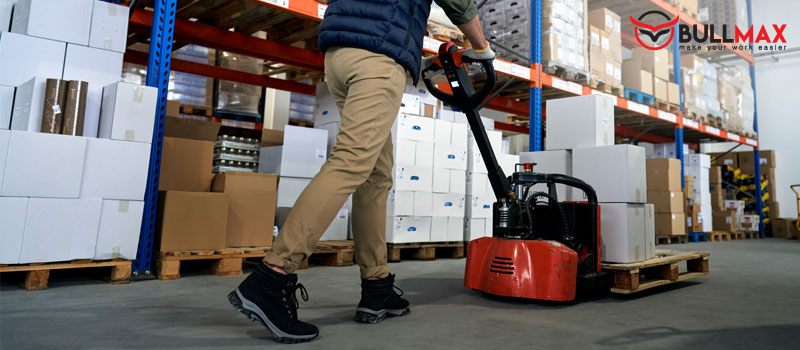
When not in use, electric pallet trucks should be parked in the right spots. Also, be sure to lower the forks to the floor.
This stops tripping hazards and makes sure the truck is safe to use when needed.
Reporting and Maintenance
1. Report Damage
Operators should immediately report any damage, malfunctions, or safety concerns.
Prompt reporting helps maintenance teams tackle issues early. Thus, this stops accidents and reduces downtime.
2. Regular Maintenance
Scheduled maintenance is key to keeping electric pallet trucks reliable and safe.
For instance, regularly inspect brakes, wheels, batteries, and other critical components.
Well-maintained equipment reduces the likelihood of unexpected failures and keeps operations running smoothly.
Explore Reliable Electric Pallet Truck Solutions with Bullmax
To use electric pallet trucks safely and effectively, train well, handle them gently, and keep alert during use.
If you’re looking for the best electric pallet truck and material handling solutions, get in touch with Bullmax today.
We can help you find the perfect equipment for your needs.


